Quality Voice & Data's Glossary of Telemarketing and Caller ID Terms

It's easy to forget that not everyone speaks fluent Caller ID. Here's a glossary of the terms QVD customers and prospects hear most often, so a conversation about how Caller ID works doesn't feel like a foreign language.
- Answer Rate — the number of calls answered compared to the number of calls made.
- Automatic Number Identification (ANI) — the billing telephone number or account number associated with a telephone number, trunk, or trunk group; in most cases it matches the Caller ID presented to the called party.
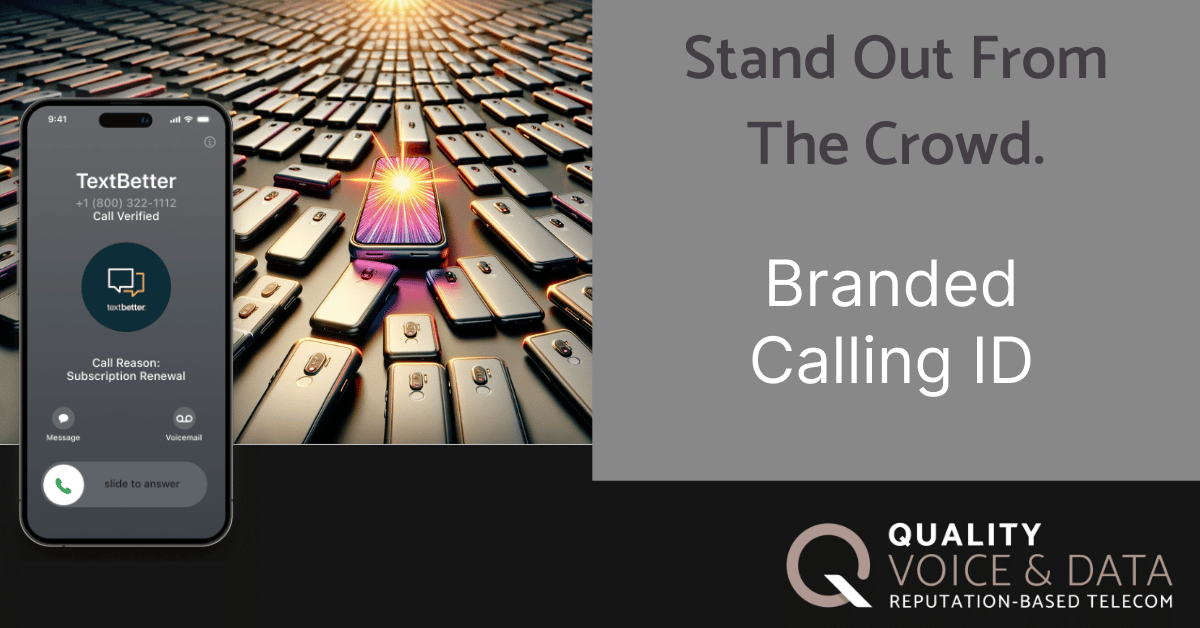
- Caller ID — the telephone number displayed as the calling party's number on the recipient's phone before the call is answered.
- Caller ID Name Display (CNAM) — a service that displays the caller's name alongside the phone number, pulled from the centralized database phone carriers use to store each customer's desired display name. Not every phone service supports it; cell phones typically only show names already saved in the user's contacts.
- Dialer — an electronic device or software that automatically dials telephone numbers.
- DID — Direct Inward Dial.
- Dips — each time a Caller ID name is displayed to the called party counts as a dip.
- Do Not Call (DNC) List — a list of phone numbers that have opted out of calls, spanning the National DNC Registry, state DNC lists, client DNC lists, and in-house DNC lists.
- Inbound (IB) — calls that originate with the customer calling in.
- IVR — Interactive Voice Response, a recorded message that answers, routes, or directs callers.
- Local Caller ID — a telephone number used as Caller ID that matches the called party's area code; nationwide campaigns often use around 110 unique area code numbers.
- MMS — multimedia message service, a text message including audio, picture, or video.
- National CNAM Database — where Caller ID names are stored; phone carriers dip into it to know what name to associate with a given number.
- Non-Automated Telephone Dialing System (Non-ATDS) — equipment that lacks the capacity to store or produce telephone numbers using a random or sequential generator and dial them; "capacity" is the key legal term, since many so-called non-ATDS systems could theoretically still qualify as one.
- Outbound (OB) — calls placed out to a person, as opposed to received.
- PSTN — the Public Switched Telephone Network, the original phone network predating the internet and VoIP.
- Ring to Number (RTN) — the number a local Caller ID number is pointed to; when a consumer calls it back, the call routes to the RTN and on to call center agents.
- SIP — Session Initiation Protocol.
- SMS/Text — Short Message Service.
- VoIP — Voice over Internet Protocol.
Hopefully this glossary helps demystify the terms that come up when discussing Local Caller ID, the Compliance Phone, and QVD's texting services.