How Caller ID Actually Works: A Q&A with Quality Voice & Data

Federal regulations require telemarketers to transmit accurate Caller ID information, including the caller's name and telephone number — using the name and number of the seller on whose behalf the calls are made is also permitted. But how does Caller ID actually work? It's one of the most misunderstood parts of telecommunications in the call center industry. We sat down with the Quality Voice & Data telecom team to walk through it.
Q: How are most call centers deploying Caller ID for outbound calls? A: Most either display the seller's (client's) phone number and name, or their own telemarketing company's. Companies that can send a different Caller ID per campaign increasingly display the seller's number and name, and we're seeing more companies use multiple seller numbers with names targeted to different geographic regions.
Q: Why would a company want a Caller ID number and name specific to a geographic area? A: To target a specific audience within a specific market. Consumers are more likely to answer a number that appears to originate from their own area code — we see answer rates increase by up to 30% this way.
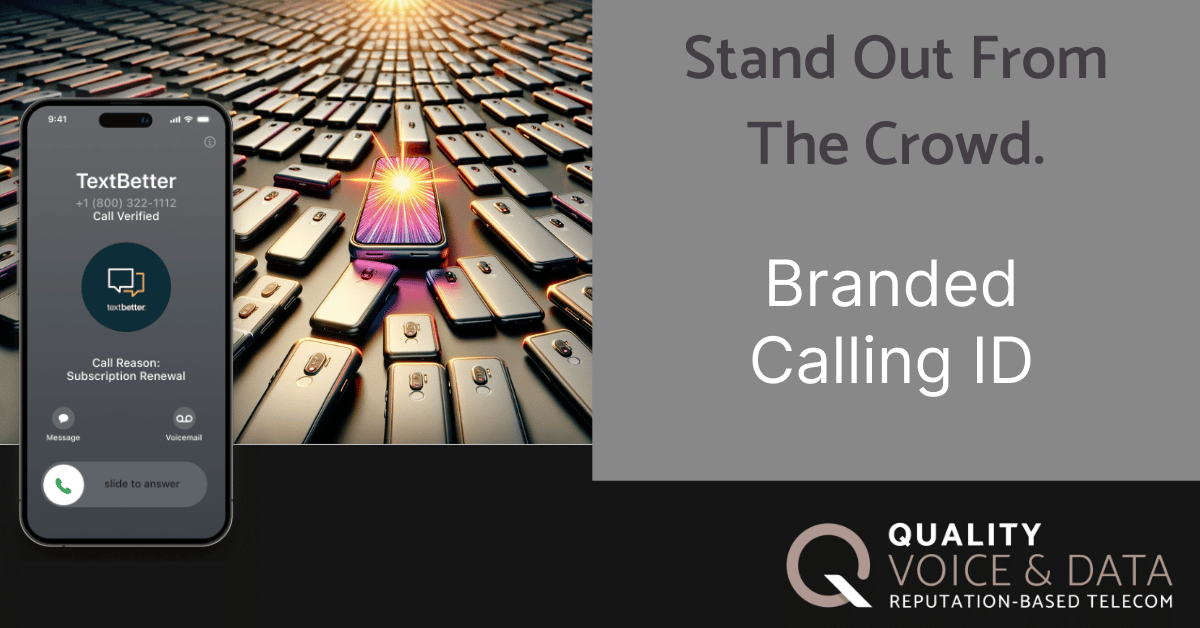
Q: There's a lot of confusion about how the caller name gets displayed. How does it actually work? A: Unlike the phone number, which is pushed or transmitted, the name is retrieved. The called party's telephone carrier looks it up and sends it to their equipment. Some call centers using PRI technology can push a name directly, but that only works if the called party also uses a PRI — a business phone technology, not something consumers use.
Q: What should a call center do to make sure the right name displays? A: Transmit the desired telephone number with each outbound call, either through the dialer or the telephone carrier at the trunk group level. The telecom provider of that number then inserts the desired display name into the National CNAM database — only the registered provider of the number can update it. When the number is called, the consumer's carrier retrieves the stored name from CNAM and passes it to their equipment.
Q: Why do so many call centers use a third party for this? A: Telephone carriers aren't set up to dynamically rotate numbers and update display names at the pace contact centers need. Third-party Caller ID management solutions fill that gap and help ensure compliance while improving answer rates.
Q: What else should call centers know? A: A few things: CNAM only accepts a 15-character name including spaces; 8XX numbers can't practically be stored in CNAM since no carrier dips for them; not every consumer's phone service supports name display; not every carrier uses the same CNAM database; and most carriers default to the directory-assistance listing name if nothing else is set.
Q: How does a call center stay compliant with both federal and state Caller ID laws? A: Make sure the displayed name is accurate, the displayed number is answered during normal business hours, and the consumer can make a Do Not Call request. Sending different Caller ID numbers and names for different campaigns, sellers, or regions is allowed, absent evidence of intent to defraud the consumer.