A Caller ID Test Is Easy and Inexpensive to Run
A Caller ID test is one of the simplest, lowest-cost checks you can run on an outbound call campaign — our provisioning team can typically get you set up in 15 minutes or less. Here are four worth trying.
#1: Replace an 8xx number
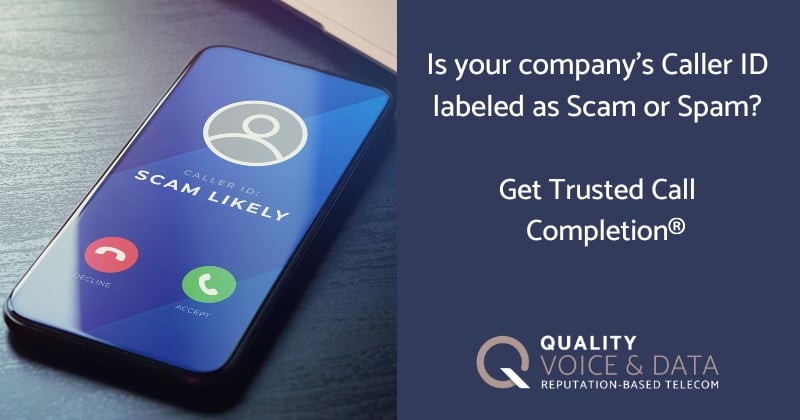
If you're still using an 8xx number for outbound Caller ID, stop. Consumers and business decision-makers have learned through experience that most 8xx calls are telemarketers, and Caller ID apps will flag a high volume of short-duration calls as "spam likely." An 8xx number also can't display a CNAM name. Swapping to a ten-digit number with CNAM tends to show an immediate lift in answer rate.
#2: Increase the number of phone numbers used for Caller ID
If you're relying on a single Caller ID number, test using somewhere between 80 and 200 numbers with CNAM instead. A professional Caller ID provisioning company like Quality Voice & Data can help determine how many numbers, which ones, and which area codes to use — including flagging high-density area codes that warrant more than one number. Most dialers can append these numbers directly to your outbound list or use a lookup table to match the right Caller ID to each dialed number.
#3: Test a different phone number provider
Not all phone numbers are created equal. Quality Voice & Data maintains a large inventory across every US area code and continuously monitors that inventory against the databases Caller ID apps rely on, so numbers held in inventory long-term start with a positive reputation rather than the neutral standing of a freshly assigned number. We can also run a free Caller ID lookup on your existing numbers to tell you if they're currently being blocked or labeled.
#4: Use QVD's Caller ID Testing Tool
Quality Voice & Data's Caller ID Testing tool lets you check a number against our monitoring database and generates a spam score from a range of signals, so you can evaluate a Caller ID number in real time and catch changes in number health as soon as they happen.